Some military symbols do not need many words. A pair of boots, a rifle, a helmet, and a set of dog tags can say what speeches often cannot: someone served, someone sacrificed, and someone will be remembered.
That symbol is known as the Battlefield Cross. It is also called the Fallen Soldier Battle Cross, Soldier’s Cross, or simply the Battle Cross. For many Americans, especially veterans, service members, military families, and Gold Star families, it is one of the most powerful images of military remembrance.
At first glance, the Battlefield Cross may look simple. But every part of it carries meaning. The boots, rifle, helmet, and dog tags are not random pieces of military gear. Together, they form a quiet memorial to a fallen service member. They represent loss, honor, brotherhood, duty, grief, and the promise that the fallen will not be forgotten.
According to the Smithsonian’s National Museum of American History, the modern version of the Battlefield Cross — made with a rifle, helmet, boots, and dog tags — became especially recognized from the Gulf War in 1991 through Operations Iraqi Freedom and Enduring Freedom as a symbol of “loss, mourning and closure” for the living.
This article explains what the Battlefield Cross means, where it comes from, what each part symbolizes, and why it remains so important in veteran culture today.
What Is the Battlefield Cross?
The Battlefield Cross is a military memorial symbol used to honor a fallen service member. It is often created with four main elements:
- Combat boots
- An inverted rifle
- A helmet
- Dog tags
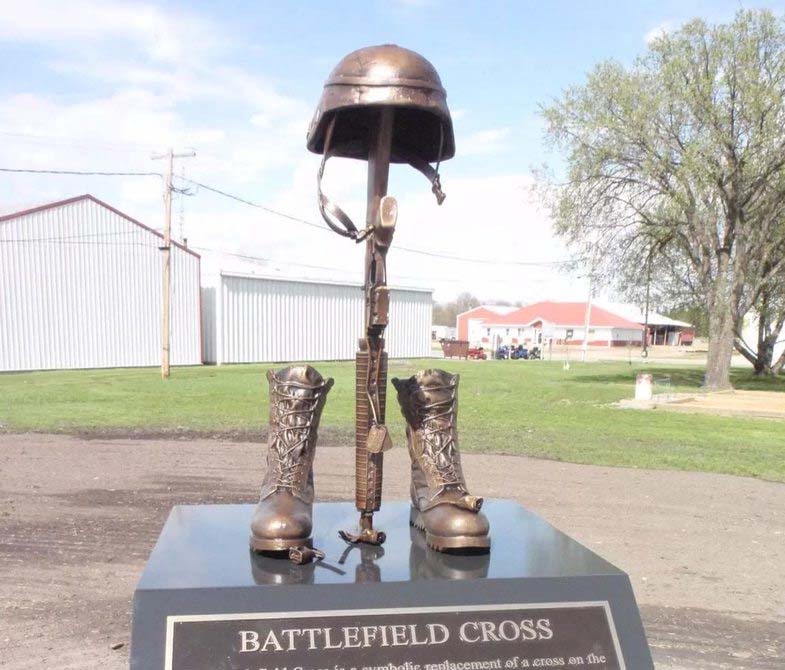
It may be placed at a battlefield, military base, memorial ceremony, funeral, veteran event, or public tribute. While the exact arrangement can vary, the meaning remains the same: it is a visual way to honor someone who gave their life in service.
The Battlefield Cross is not just a decoration. It is a symbol of respect. It gives fellow service members, families, and communities a place to pause, reflect, grieve, salute, pray, or simply remember.
In veteran culture, symbols matter deeply. They carry meaning that may be difficult to explain to someone outside the military community. The Battlefield Cross is one of those symbols. It speaks to service, sacrifice, loyalty, and the bond between those who served together.
Although it includes the word “cross,” the modern Battlefield Cross is widely understood as a military memorial symbol. For some people, it may carry spiritual meaning. For others, it represents sacrifice, remembrance, and respect in a broader, non-denominational way.
The History Behind the Battlefield Cross
The exact origin of the Battlefield Cross is not always described the same way, and its meaning has evolved over time. Earlier battlefield memorials were often used to mark where a service member had fallen or to identify a burial site. Over the years, the symbol became more formal and more widely recognized.
The modern version most Americans recognize today — boots, rifle, helmet, and dog tags — became especially familiar during more recent U.S. military conflicts. The Smithsonian notes that this version became strongly associated with the Gulf War in 1991, as well as the wars in Iraq and Afghanistan.
For service members, the Battlefield Cross was more than a marker. It gave the living a way to say goodbye. In the middle of war, where grief often has to wait, this simple memorial gave soldiers, Marines, airmen, sailors, guardians, and families a moment of recognition.
Over time, the Battlefield Cross moved beyond combat zones. Today, it can be seen in military cemeteries, veteran memorials, patriotic artwork, Memorial Day ceremonies, veteran tribute shirts, tattoos, decals, flags, and remembrance displays.
It has become part of American veteran culture because it represents something deeply human: the need to honor those who never came home.
What Each Part of the Battlefield Cross Means
The Battlefield Cross is powerful because each piece has its own meaning. Together, the boots, rifle, helmet, and dog tags create the image of a fallen warrior.
The Boots: The Final March
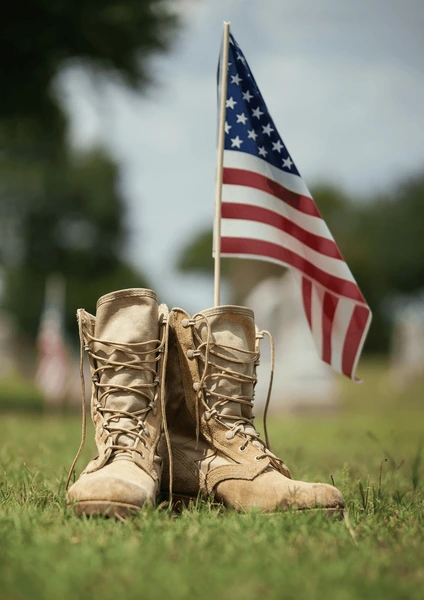
The boots are one of the most human parts of the Battlefield Cross.
They represent the service member’s final march. They remind us that the fallen once walked, trained, deployed, stood watch, carried weight, and served alongside others. Boots are not just equipment. They carry the memory of miles walked, hardships endured, and duties completed.
For many veterans, boots are personal. They are connected to long days, difficult terrain, early mornings, deployments, and the physical reality of military life. When placed at the base of the Battlefield Cross, the boots suggest that the journey has ended, but the memory remains.
The boots also remind civilians that the fallen were real people. They were not just names on a wall or numbers in a history book. They were sons, daughters, brothers, sisters, husbands, wives, fathers, mothers, friends, and neighbors.
The boots say: this person stood here, served here, and mattered.
The Rifle: A Fallen Warrior
The rifle is usually placed upright or inverted as part of the memorial. In many Battlefield Cross displays, the rifle is positioned with the barrel downward and the stock upward, creating the central structure of the memorial.
The rifle represents the fallen service member as a warrior. It also symbolizes the end of their fight. The weapon is no longer carried. The mission, for that service member, is complete.
This does not glorify war. Instead, it marks a solemn pause. It tells those who see it that a life was given in service. It asks for silence, respect, and remembrance.
For veterans, the rifle can also represent duty. It reminds them of the responsibility carried by those in uniform: to protect, to serve, to stand watch, and to defend others when called upon.
In the Battlefield Cross, the rifle is not just a weapon. It becomes part of a memorial. It represents service, sacrifice, and the heavy cost of war.
The Helmet: Duty, Protection, and Sacrifice
The helmet is usually placed on top of the rifle. It helps complete the image of the fallen service member.
A helmet is a piece of protection. It represents the danger that comes with military service. It also represents the person who wore it — someone who accepted risk, followed orders, served a mission, and stood beside others.
When placed on the Battlefield Cross, the helmet becomes deeply symbolic. It is no longer just military gear. It becomes a reminder of courage, vulnerability, and sacrifice.
The helmet also makes the memorial feel personal. Even without a face, the image feels human. It reminds people that the fallen were individuals with names, stories, families, and lives beyond the uniform.
The Dog Tags: A Name That Will Not Be Forgotten
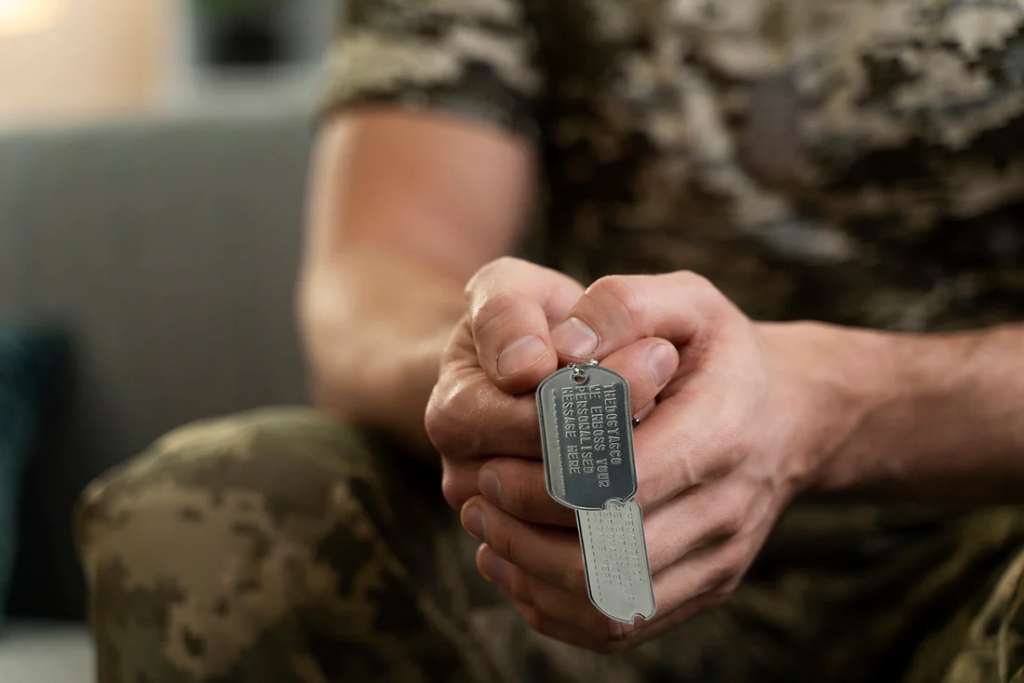
Dog tags may be small, but in the Battlefield Cross, they carry enormous meaning.
Dog tags represent identity. They remind us that every fallen service member had a name. They were not simply part of a unit, a branch, or a war. They were individual people with families, hometowns, memories, and futures.
In military culture, dog tags are closely connected to identification, service, and personal sacrifice. When dog tags hang from the rifle, they make the memorial specific. They tell us that this symbol is not only about military loss in general. It is about someone.
The dog tags say: remember the name. Remember the person. Remember the life.
That is why the Battlefield Cross is often connected with phrases such as:
Never Forgotten
Remember the Fallen
Honor the Fallen
Fallen But Never Forgotten
All Gave Some, Some Gave All
These phrases are powerful because they reflect the promise behind the symbol: the fallen will not disappear from memory.
Why the Battlefield Cross Matters in Veteran Culture
To someone outside the military community, the Battlefield Cross may look like a collection of military equipment. To a veteran, it may feel like a name, a memory, a brother, a sister, or a moment that never fully leaves.
Veteran culture is built on shared experience. Training, deployments, hardship, danger, humor, discipline, loss, and loyalty all create bonds that are difficult to explain from the outside. The Battlefield Cross speaks directly to those bonds.
It matters because it represents more than death. It represents brotherhood, service, loyalty, grief, and remembrance.
It Represents Brotherhood
Military service often creates strong bonds between people who serve together. They train together, struggle together, deploy together, and rely on one another in ways many civilians may never experience.
When one service member falls, the loss is not abstract. It is personal. It affects the unit, the family, the community, and everyone who served beside that person.
The Battlefield Cross honors that bond. It says that the fallen service member was one of their own.
It Gives Shape to Grief
Grief in military life can be complicated. Sometimes there is little time to process loss. Missions continue. Duties remain. People still have to move, serve, and survive.
A Battlefield Cross gives grief a physical place.
It gives service members and families something to stand before. Something to salute. Something to touch. Something to remember.
That is one reason the symbol is so powerful. It turns grief into a visible act of respect.
It Connects Veterans, Families, and Civilians
The Battlefield Cross also helps civilians understand the weight of military sacrifice.
Not everyone has served. Not everyone understands deployment, combat, or military loss. But almost anyone can look at the Battlefield Cross and feel its seriousness.
The empty boots, the silent helmet, the dog tags, and the rifle all point to absence. They show that someone is missing. Someone who once stood there is no longer there.
For military families and Gold Star families, that absence is deeply personal. For veterans, it may bring back memories of friends, units, deployments, or ceremonies. For civilians, it can be a reminder that freedom and security often come with a human cost.
Is the Battlefield Cross a Religious Symbol?
Because it is called a “cross,” some people may assume the Battlefield Cross is only a religious symbol. In veteran culture, however, it is widely recognized as a military memorial symbol.
For some families, the Battlefield Cross may carry spiritual meaning. It may be connected with prayer, faith, or the hope of peace after death. For others, it is not religious at all. It represents duty, sacrifice, loss, honor, and remembrance.
The meaning often depends on the person, the family, the ceremony, and the context.
What makes the Battlefield Cross so widely recognized is that its message is clear even without words. It honors a fallen service member. It creates a moment of respect. It reminds the living to remember.
The Battlefield Cross on Memorial Day, Veterans Day, and Other Military Observances
The Battlefield Cross is especially meaningful during American military remembrance events. It may appear in ceremonies, parades, memorial displays, veteran gatherings, patriotic artwork, and tribute apparel.
Several U.S. observances connect naturally with this symbol.
Memorial Day
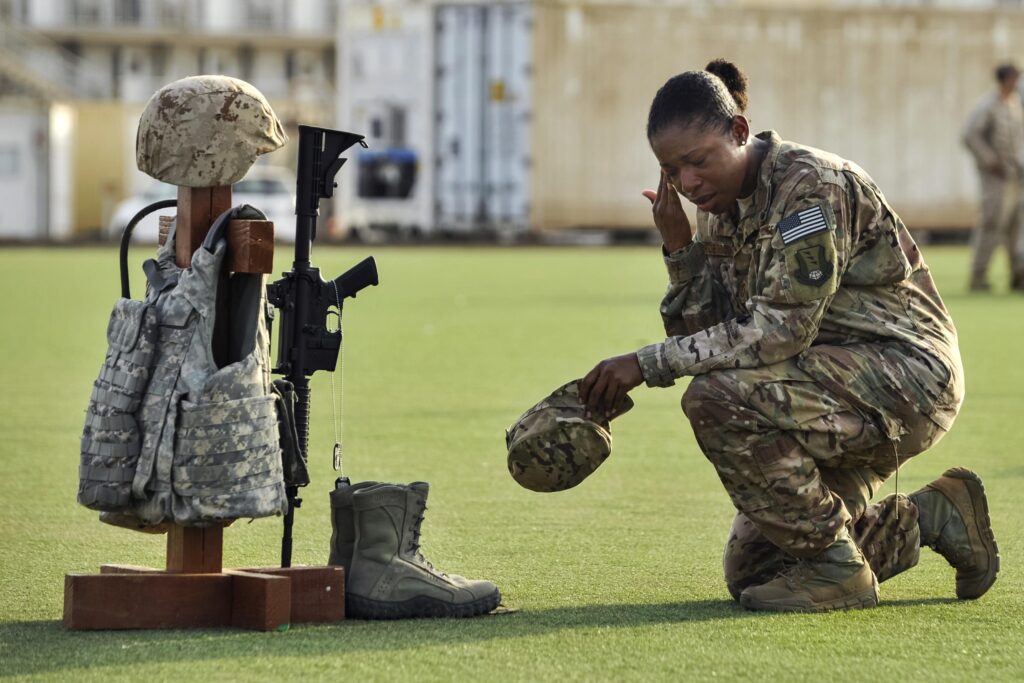
Memorial Day is one of the most important times of the year for the Battlefield Cross. The U.S. Department of Veterans Affairs explains that Memorial Day is observed on the last Monday in May and is meant to remember and honor military personnel who died in service to the country.
That makes the Battlefield Cross especially appropriate for Memorial Day. While many people think of the holiday as the beginning of summer, its deeper meaning is remembrance.
The Battlefield Cross reminds people what Memorial Day is really about: honoring those who did not come home.
For 2026, Memorial Day falls on May 25, 2026. Around this time, many Americans attend ceremonies, visit cemeteries, place flags, wear remembrance shirts, or share patriotic tributes online.
Veterans Day
Veterans Day is observed on November 11 each year. Unlike Memorial Day, Veterans Day honors all who served, especially living veterans. The VA notes the difference clearly: Memorial Day honors those who died in service, while Veterans Day honors all veterans.
Even though the Battlefield Cross is most directly connected to fallen service members, it can still appear around Veterans Day because veteran culture is deeply connected to remembrance. Many veterans use the day not only to reflect on their own service, but also to remember those they served with.
Armed Forces Day
Armed Forces Day honors those currently serving in the U.S. Armed Forces. In 2026, Armed Forces Day fell on May 16, 2026.
While Armed Forces Day is more focused on active-duty service members, the Battlefield Cross may still appear in broader military tribute displays, especially where communities recognize both service and sacrifice.
National POW/MIA Recognition Day
National POW/MIA Recognition Day is observed on the third Friday of September each year. It honors prisoners of war, those still missing in action, and their families.
In 2026, National POW/MIA Recognition Day falls on September 18, 2026. This observance connects strongly with themes of remembrance, absence, sacrifice, and the promise to never forget.
Although the Battlefield Cross and the POW/MIA symbol are different, they often speak to the same emotional truth: some sacrifices must be remembered by the entire nation.
The Emotional Meaning for Veterans and Military Families
The Battlefield Cross is powerful because it is simple.
It does not need a long explanation. It does not need a speech. It does not need a face. The empty boots, the rifle, the helmet, and the dog tags tell the story.
For veterans, the symbol may bring back memories of someone they knew. A friend. A teammate. A leader. A young service member who never got to go home. It may represent a moment that still feels close, even many years later.
For military families, the Battlefield Cross can represent pride and pain at the same time. Pride in service. Pain in loss. Love for the person behind the uniform.
For Gold Star families, it may feel especially personal. It can represent the empty seat at the table, the phone call that never came, the future that was changed forever.
That is why the Battlefield Cross should always be used with care. It is not just a patriotic image. It is a memorial image. It carries grief, honor, and memory.
Respectful Ways to Use the Battlefield Cross Symbol
Because the Battlefield Cross represents fallen service members, it should be used respectfully. It should never feel like a joke, a trend, or a casual decoration without meaning.
When used thoughtfully, the symbol can be a meaningful part of:
- Memorial Day shirts
- Veteran tribute shirts
- Fallen soldier remembrance gifts
- Patriotic wall art
- Military family apparel
- Gold Star family tribute items
- Veteran organization designs
- Memorial event signs
- Remembrance decals
- Military cemetery or ceremony displays
The best Battlefield Cross designs are usually simple, serious, and easy to understand. They often use respectful phrases such as:
Honor the Fallen
Remember the Fallen
Never Forgotten
All Gave Some, Some Gave All
Freedom Isn’t Free
Fallen But Never Forgotten
Until Valhalla
For those who wear veteran or patriotic apparel, the Battlefield Cross is more than a design. It can be a quiet way to carry remembrance. It can show support for military families. It can honor the fallen during Memorial Day, Veterans Day, military reunions, veteran rides, cemetery visits, or everyday life.
The key is respect. A Battlefield Cross shirt, flag, or sign should feel like a tribute, not a costume. It should honor the meaning behind the symbol.
Common Questions About the Battlefield Cross
What does the Battlefield Cross symbolize?
The Battlefield Cross symbolizes a fallen service member. It represents military sacrifice, grief, honor, remembrance, and respect for those who gave their lives in service.
What do the boots mean in the Battlefield Cross?
The boots often represent the fallen service member’s final march. They remind us that the person once walked, served, deployed, and stood beside others.
Why is the rifle upside down?
The inverted rifle is commonly understood as a symbol of a fallen warrior and the end of that service member’s fight. It creates the central structure of the memorial and marks a moment of respect.
What does the helmet mean?
The helmet represents duty, protection, danger, and the service member who wore it. When placed on the rifle, it helps create the image of the fallen.
What do the dog tags mean?
Dog tags represent identity. They remind us that every fallen service member had a name, a family, a story, and a life beyond the uniform.
Is the Battlefield Cross only for soldiers?
The Battlefield Cross is often associated with fallen soldiers, but its meaning is understood across the broader military and veteran community. It may be used to honor fallen service members from different branches, depending on the ceremony or context.
Is the Battlefield Cross appropriate for Memorial Day?
Yes. Memorial Day honors those who died while serving in the U.S. military, so the Battlefield Cross is one of the most fitting symbols for Memorial Day remembrance.
Can civilians wear a Battlefield Cross shirt?
Yes, civilians can wear a Battlefield Cross shirt if it is done respectfully. Many military families, patriotic Americans, and supporters of veterans wear this symbol to honor the fallen and show remembrance.
A Promise to Remember
The Battlefield Cross is one of the most meaningful symbols in American veteran culture. It is simple, but it carries a heavy message.
The boots remind us of the final march.
The rifle reminds us of duty and sacrifice.
The helmet reminds us of courage and protection.
The dog tags remind us that every fallen service member had a name.
Together, they create a memorial that speaks without words.
Whether seen at a military ceremony, on Memorial Day, at a veteran event, in a cemetery, on a tribute shirt, or in a patriotic home display, the Battlefield Cross carries one message above all:
Honor the fallen. Remember their names. Never forget their sacrifice.
For veterans, military families, and patriotic Americans, the Battlefield Cross is not just an image. It is a promise.